
Last week, both the Bank of Canada and the U.S. Federal Reserve cut rates by 25 basis points. Canada’s central bank lowered its overnight rate to 2.25 per cent, while the Fed reduced its benchmark lending rate to a range of 3.75 per cent to 4 per cent.
The rate cuts were expected, but the guidance on future moves came as a surprise. The Bank of Canada signalled that this may be the end of rate cuts, noting that the current policy rate is “about the right level to keep inflation close to 2 per cent while helping the economy through this period of structural adjustment,” if inflation and economic activity evolve broadly in line with its October projections.
Inflation is currently running at 2.5 per cent, but the Bank believes the economy is on a path to return inflation to its 2 per cent target. In the current environment, even with real GDP expected to grow at 1.2 per cent in 2025 and 1.1 per cent in 2026, there is little room for monetary policy to respond. Nevertheless, if the labour market remains soft, another 25-basis-point cut in 2026 is possible.
For most mortgage borrowers, the level of federal government debt and its upward pressure on long-term bond yields will likely influence mortgage rates more than the Bank of Canada’s actions.
The U.S. Federal Reserve’s rate cut drew attention for a different reason. While the move was expected, some economists were surprised by the hawkish dissent from Kansas City Fed president Jeffrey Schmid at the Federal Open Markets Committee (FOMC) meeting. With governors Michelle Bowman, Christopher Waller, and more recently Stephen Miran expressing more dovish views, it is increasingly difficult for the hawks on the committee to act as a unified group. The Fed’s dot plot also shows a growing number of hawkish participants, including some non-voting regional presidents.
There was also some surprise over Chair Jerome Powell’s cautious stance on further rate cuts. He warned that “in the Committee’s discussions at this meeting, there were strongly differing views about how to proceed in December. A further reduction in the policy rate at the December meeting is not a foregone conclusion—far from it. Policy is not on a preset course.” Given the split within the committee, his caution was understandable.
A key challenge for the Fed is determining what’s driving the economic slowdown. If the neutral rate is truly around 3 per cent and policy is still slightly restrictive, the Fed can address weakening conditions with further rate cuts. However, if the slowdown stems from stagflationary pressures linked to government policy—and the economy is softening despite financial conditions already being relatively easy—the Fed has fewer tools at its disposal. In that scenario, the responsibility shifts to the administration, not the central bank, to support the economy.
The Bank of Canada has made its position clear. For the Fed, the jury is still out.
Housing Affordability Watch
CMI monitors the latest developments and offers insights on solutions to Canada’s housing affordability crisis
Will modular construction be a game-changer?
Canada’s housing crisis has sparked renewed interest in modular construction as a faster, more affordable way to build at scale. In our new three-part series, we examine whether modular housing can meaningfully expand supply and improve affordability.
We start by looking back at Wartime Housing Limited — the Crown corporation that rapidly delivered homes for war-industry workers and returning veterans during the Second World War — to uncover lessons for today’s policymakers.
Read part one our analysis in the latest Housing Affordability Watch: Will Modular Construction Be a Game-Changer?
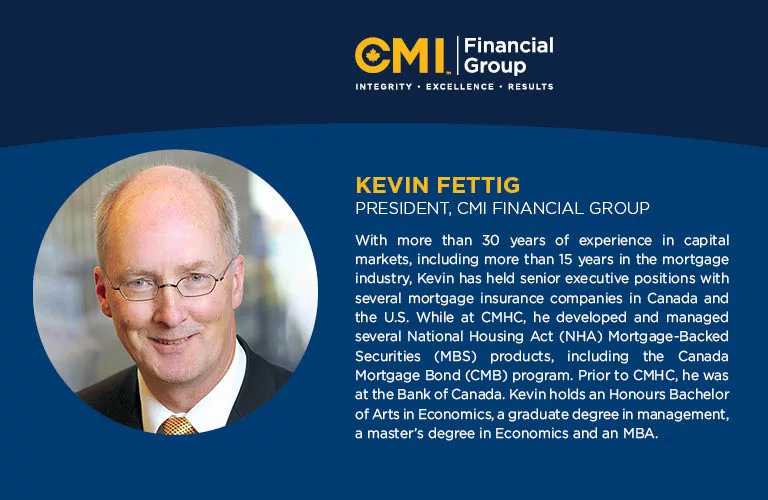
Independent Opinion
The views and opinions expressed in this publication are solely and independently those of the author and do not necessarily reflect the views and opinions of any person or organization in any way affiliated with the author including, without limitation, any current or past employers of the author. While reasonable effort was taken to ensure the information and analysis in this publication is accurate, it has been prepared solely for general informational purposes. Any opinions, projections, or forward-looking statements expressed herein are solely those of the author. There are no warranties or representations being provided with respect to the accuracy and completeness of the content in this publication. Nothing in this publication should be construed as providing professional advice including investment advice on the matters discussed. The author does not assume any liability arising from any form of reliance on this publication. Readers are cautioned to always seek independent professional advice from a qualified professional before making any investment decisions.
